Sushiro Suntec City and the Sushi Belt That Keeps Moving When the Mall Won’t Slow Down
I heard the belt before I saw it.
That low, patient hum beneath the noise of the mall. Suntec City was doing what it always does — office workers cutting through with lanyards swinging, families steering strollers, someone’s shopping bag brushing my elbow as they passed. The whole place moved like water that never quite settles.
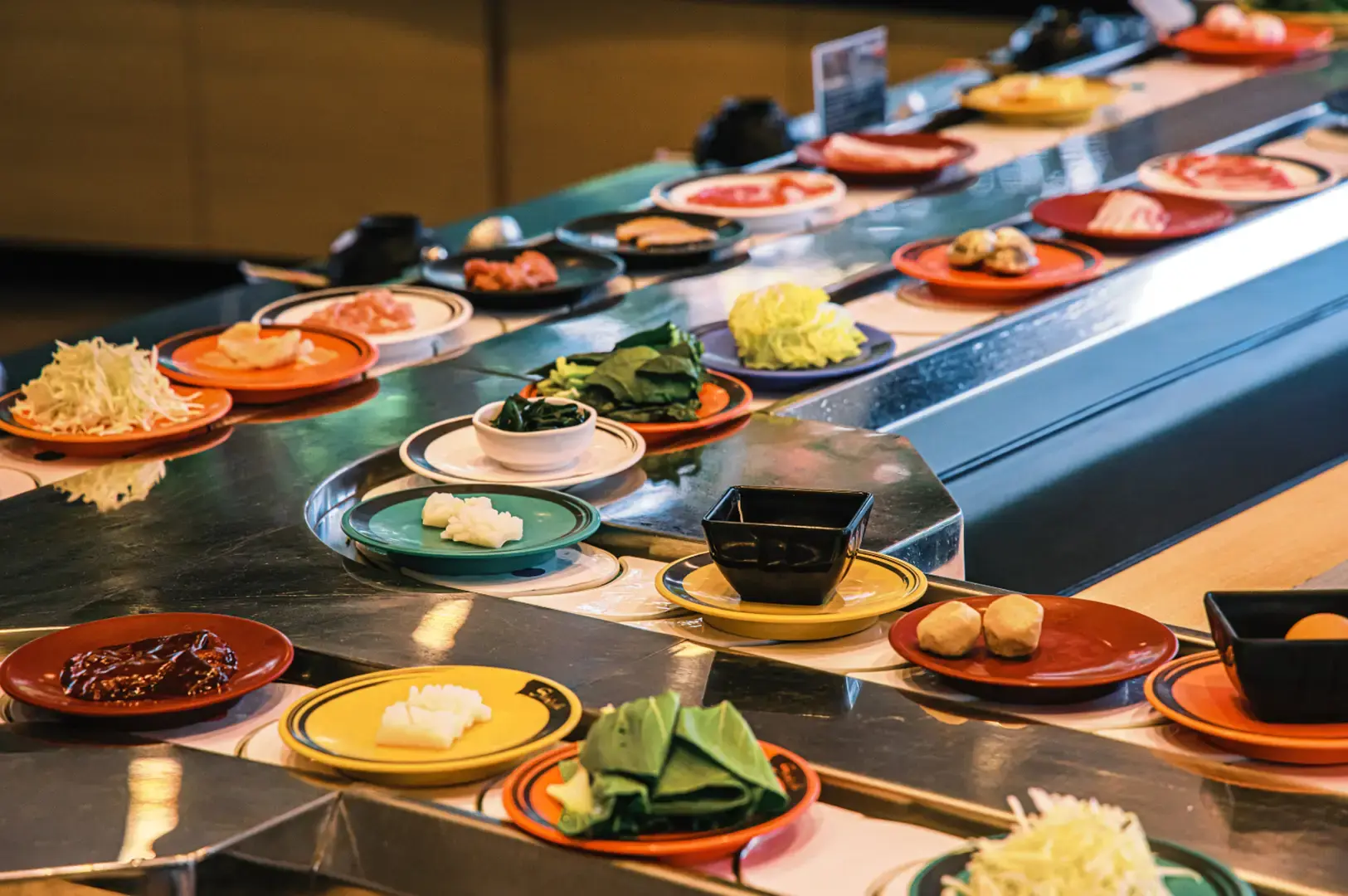
And then, just inside the doorway near Tower 4, a smaller current. Plates gliding by on a belt, one after another, calm and unbothered by the crowd outside. Here it is, Sushiro.
I stood in the queue for about fifteen minutes on a Wednesday, a little before noon. Not bad, though I’d read that peak lunch waits can stretch to twenty or forty minutes if you don’t use the app. The queue itself felt like part of the meal. You wait, you watch other people eat, you start choosing before you’ve even sat down.
That’s the thing about Sushiro Suntec City. The meal doesn’t begin with a menu. It begins with watching.
Settling Into the Rhythm
I took a counter seat along the belt, which is where I’d tell anyone to sit if they can. The booths are fine and better for groups, but the counter puts you closest to the movement. You feel like part of the machinery in a quiet way.
The seating runs a little tight. My neighbour’s elbow and mine kept a polite negotiation going the whole meal. This isn’t a room built for lingering or for space. It’s built for turnover.
Two Dining Rhythms
There are two rhythms here, and it took me a moment to understand them:
- The lower belt carries plates past you — surprise, temptation, the small thrill of reaching for something fresh before it drifts away.
- The upper express lane is different. That one belongs to the tablet, which you can easily navigate on both iOS and Android devices. You tap what you want, and it arrives directly, no luck involved.
The tablet is for certainty. The belt is for temptation.
I found myself doing both. Watching the belt for a plate that caught my eye, then reaching for the screen when I wanted something specific. It’s a strange kind of dining. Active. You’re always scanning, comparing, recalculating. Every plate asks a small question: now, or wait for the next one?
For those seeking variety beyond sushi plates, options like Chirashizushi offer a delightful alternative worth exploring in our detailed listicle.
The First Plates
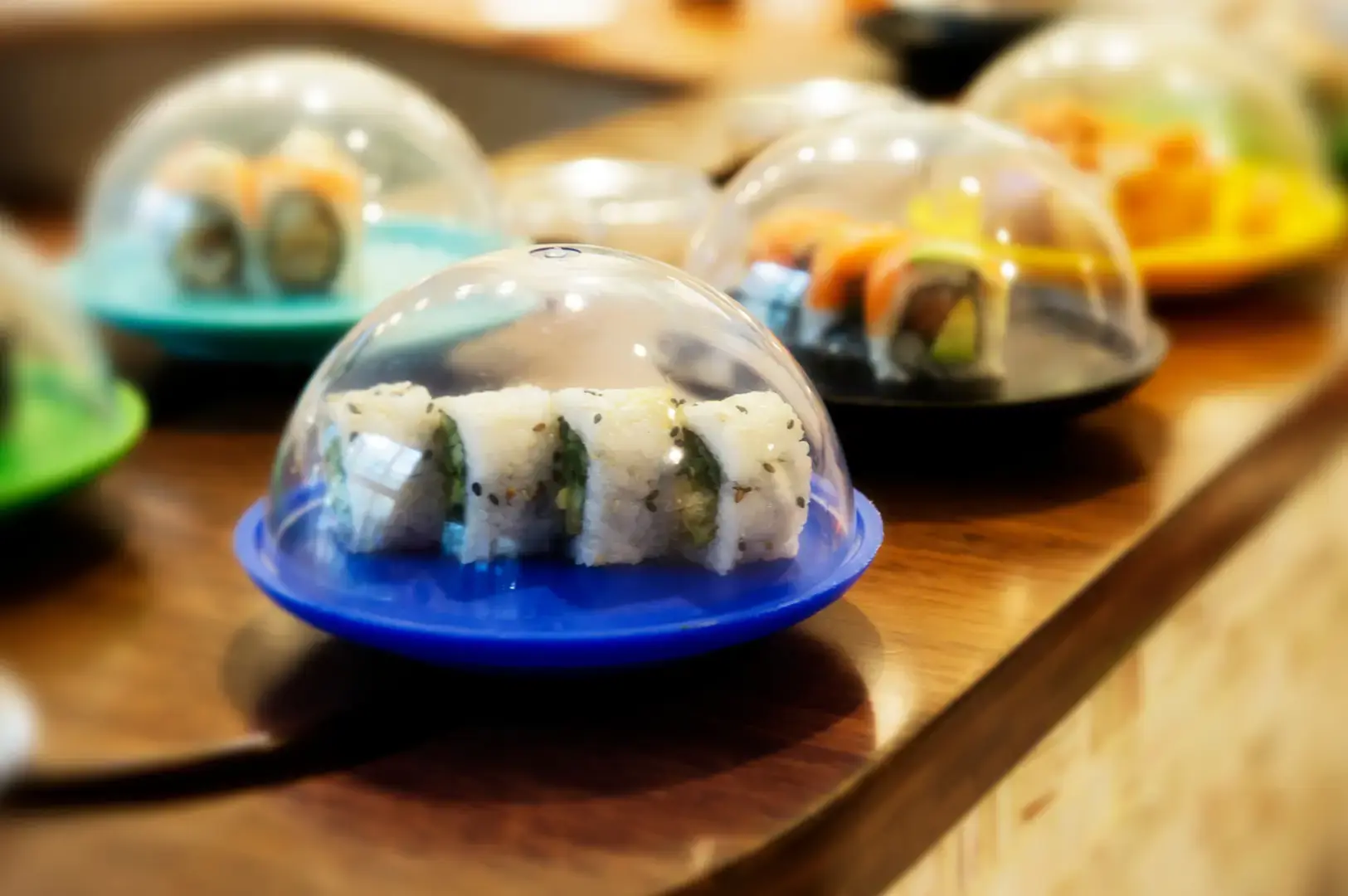
The first plate I took was salmon nigiri, around S$2.20 for two pieces. A red plate, which at Sushiro feels like a quick yes.
The fish was cool and clean, draped over rice that held together without being packed too tight. No fishy note, no fraying edge. It wasn’t trying to be rarefied. It was trying to arrive, satisfy, and move on. And for the price, it did exactly that.
I reached for a grilled salmon plate next, drawn by the faint char I could smell before it reached me. This one carried warmth at the edges, an oilier richness that broke up the coolness of the plain nigiri. The seared top had that gentle bitterness good aburi gives you, a small contrast against the sweet rice beneath. I loved how it interrupted the rhythm. A warm plate among the cool ones.
The Black Plate Experience
Then I let myself pause for the otoro, a black plate at around S$4.80.
A black plate asks you to slow down. Inside an otherwise affordable meal, it felt like a small luxury, and I ate it the way you eat something you’ve decided to spend a little more on. The fatty tuna was soft, almost dissolving, that marbled richness spreading slowly. It didn’t last long. It rarely does. But it earned its place among the cheaper plates around it.
Somewhere in the middle, I ordered a chawanmushi from the tablet, roughly S$3.00 to S$3.50. This was the one still plate in a meal defined by motion. The steam rose gently when I lifted the lid. Warm, soft, custardy, quiet. I enjoyed eating it slowly with a small spoon while the belt kept moving beside me, and I understood why it’s worth ordering. It gives you a moment to stop scanning. A pause you can taste.
What the Belt Does to Appetite
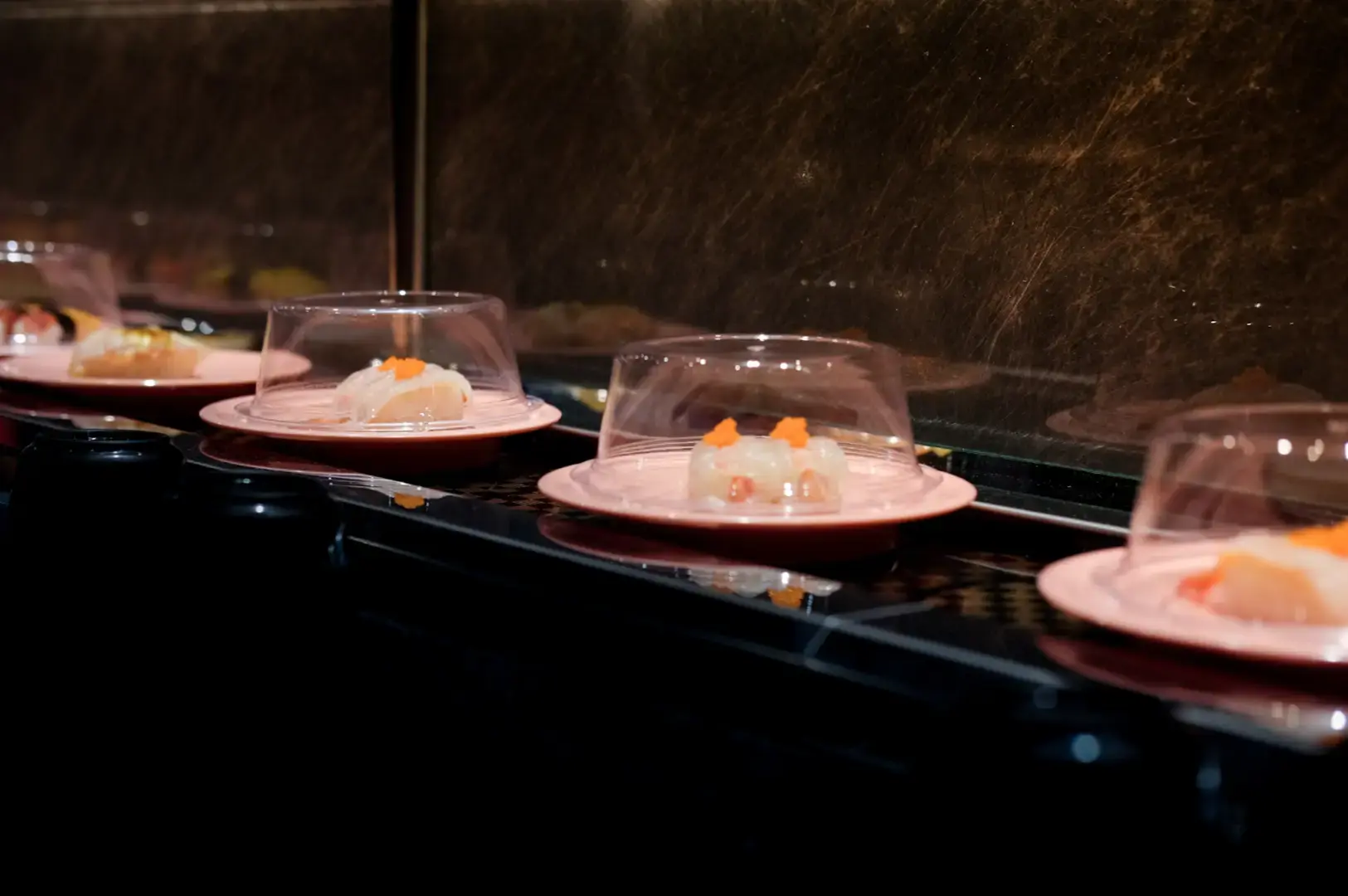
Here’s what I noticed, and what stayed with me:
- The belt changes how you eat. It makes you more curious, more willing to experiment.
- When a plate costs around S$2.20, you’re more likely to reach for something you wouldn’t normally try.
- The low price isn’t really the point. The point is how that price loosens something in you.
You become a person who eats one decision at a time.
At a traditional sushi counter, the chef decides the order, the pace, the story. Here, the story is yours to assemble, plate by plate, and it’s a little chaotic and a little playful. Sometimes I let a plate pass and regretted it. Sometimes I reached too fast for something I didn’t really want. The best plates, I think, were the ones I almost let go by.
Dining Solo?
Is it scattered? A little. This isn’t a meal that builds toward anything. It’s a meal that accumulates. You look up at some point and there’s a small tower of coloured plates at your elbow, each one a choice you made without thinking too hard.
For a solo lunch, this suited me well. No conversation required, no waiting on service, just me and the belt and the small satisfaction of choosing. I could see it working for families too — the movement is entertainment as much as dinner, and children would lose themselves in watching the plates go by.
The Suntec Reality
Let me be practical for a moment, because you’ll want to know:
- Location: Sushiro Suntec City sits on the ground floor near Tower 4, at #01-649/650, 3 Temasek Boulevard, Singapore 038983.
- Accessibility: Both Promenade and Esplanade MRT are around five minutes away, with covered walkways connecting toward Marina Square and the Fountain of Wealth. Easy to reach, easy to fold into a day of errands or dining out.
- Operating hours: The restaurant operates daily from 11:00 AM to 10:00 PM, with last orders taken at 9:30 PM.
- Reservations: To skip the queue, download the Sushiro app on your iOS or Android device before you go. It handles reservations, queue numbers, and sends notifications so you’re ready when your table is.
- Average spend: My average spend landed around S$18, though it’s easy to sit anywhere between S$10 and S$25 or more depending on how many black plates you give in to. My otoro alone nudged the bill upward, and I didn’t regret it.
- Best visiting times: Before 11:30 AM, mid-afternoon, or early dinner. Suntec’s convention traffic matters here. On event days, the queue outside might reflect the mall’s schedule as much as the restaurant’s popularity, so a little timing goes a long way.
The Practical Layer: App, Takeaway, and Promotions
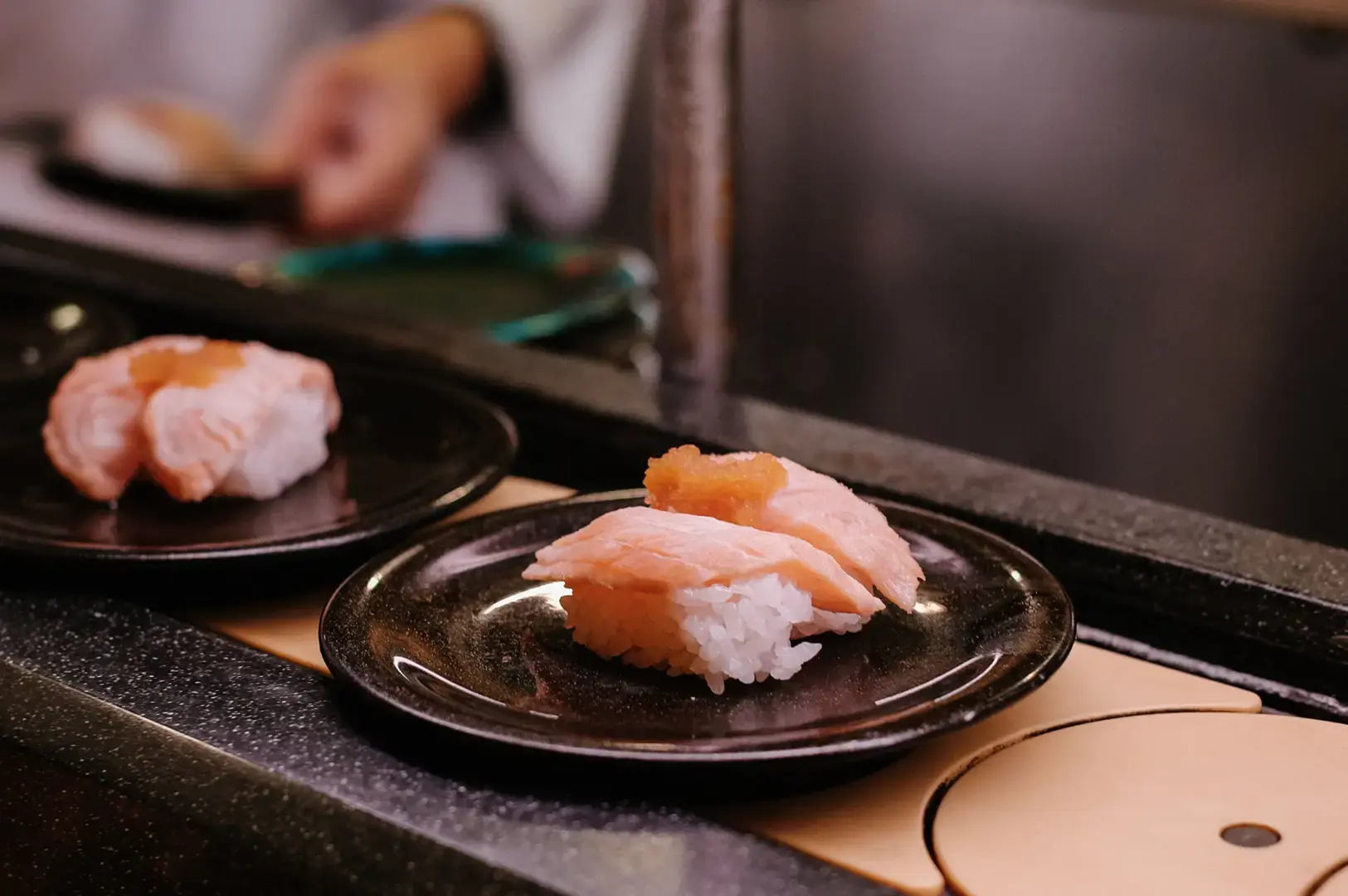
Sushiro Suntec City is not only built for dine-in rhythm. If the queue is long or you would rather bring the sushi home, Sushiro also offers takeaway options that keep the meal simple, fresh, and ready to serve. The trade-off is that takeaway gives you the flavour and quality, but not the small theatre of watching the belt move beside your table.
Need | What to Do |
|---|---|
Planning a dine-in visit | Use the Sushiro app before heading to Suntec City. |
Avoiding long waits | Check reservation slots, queue status, and notifications on the app. |
Ordering for home | Choose takeaway when you want sushi without waiting for a table. |
Finding deals | Check the app or Suntec City channels for exclusive promotions and limited-time menu content. |
Visiting the outlet | Head to Sushiro Suntec City at 3 Temasek Boulevard, #01-649/650, Singapore 038983. |
How to Book and Stay Connected
To make your visit smoother, download the Sushiro app on iOS or Android before you go. The app helps with reservation, queue numbers, and notifications, so you are ready when your table is called.
This matters most during lunch, dinner, weekends, and busy event periods around Suntec City. A little planning can change the whole dining experience, especially when the mall is crowded and the sushi belt is already moving.
You can also use the app to check exclusive promotions, new menu content, and limited-time sushi items. It is useful whether you want to book ahead, enjoy Sushiro Suntec in the heart of the mall, or take the meal home. For other dining options in Suntec, consider Genki Sushi Suntec, another popular conveyor belt sushi spot offering a vibrant experience.
As The Sushi Belt Slows Down
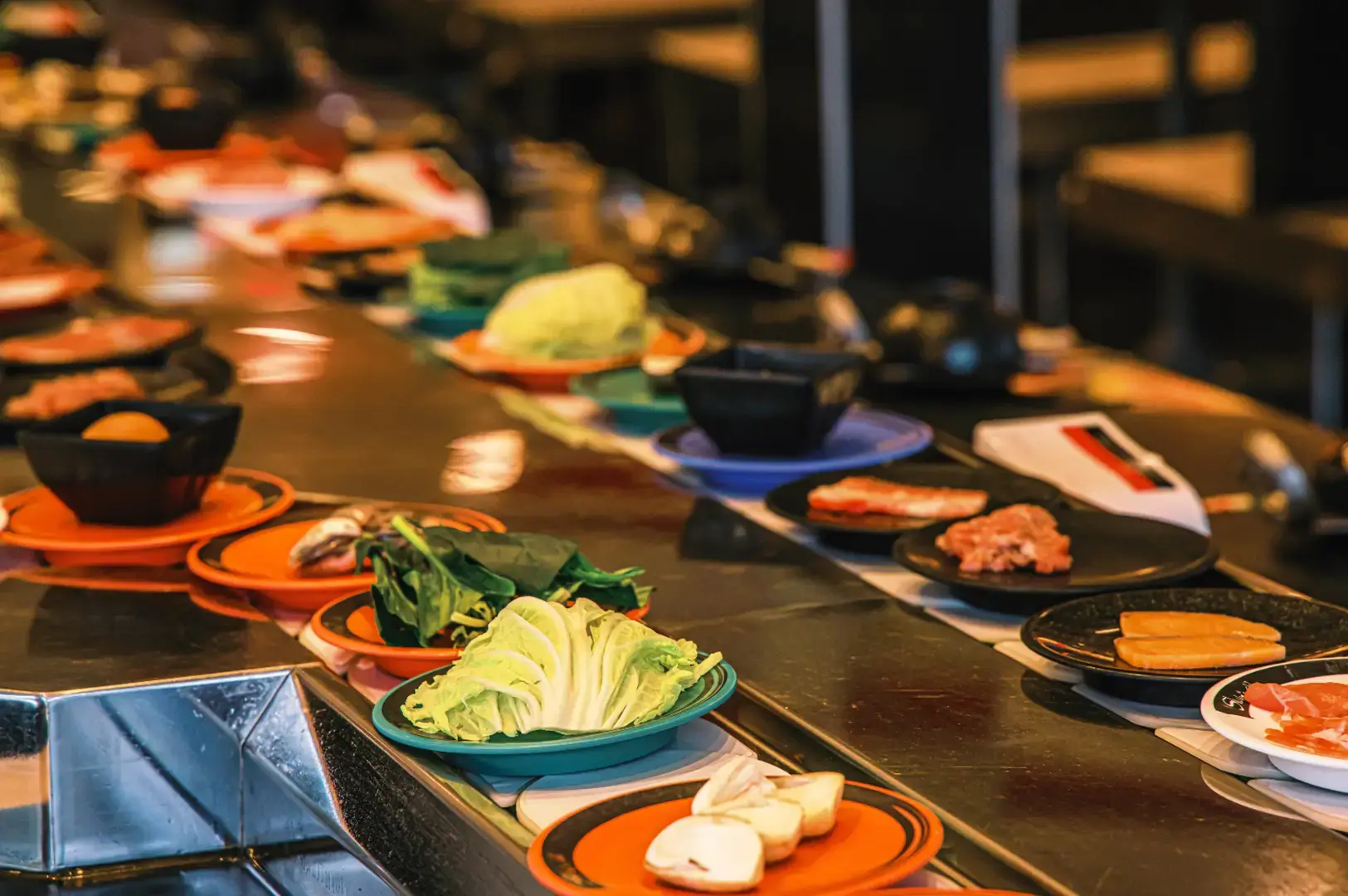
I went in curious about whether the pace would rush me. It didn’t, quite. It carried me instead.
Sushiro Suntec is at its best when you judge it for what it is — mall sushi with rhythm, not a temple of craft. It turns Suntec’s restlessness into something you can sit inside for a while. Suntec moves in crowds. Sushiro moves in plates. And somehow the belt keeps a steadier calm than the mall ever manages.
Come here if you want a quick solo lunch, a casual meal with friends, a family dinner where the food doubles as entertainment, or something easy after a long day of moving through the mall. Skip it if you’re after premium sashimi, slow table service, or a calm room away from the noise.
Would I return? I’d return on a weekday, before the lunch rush, with the app already open. For the grilled salmon and one black plate I’d tell myself I wasn’t going to order.