
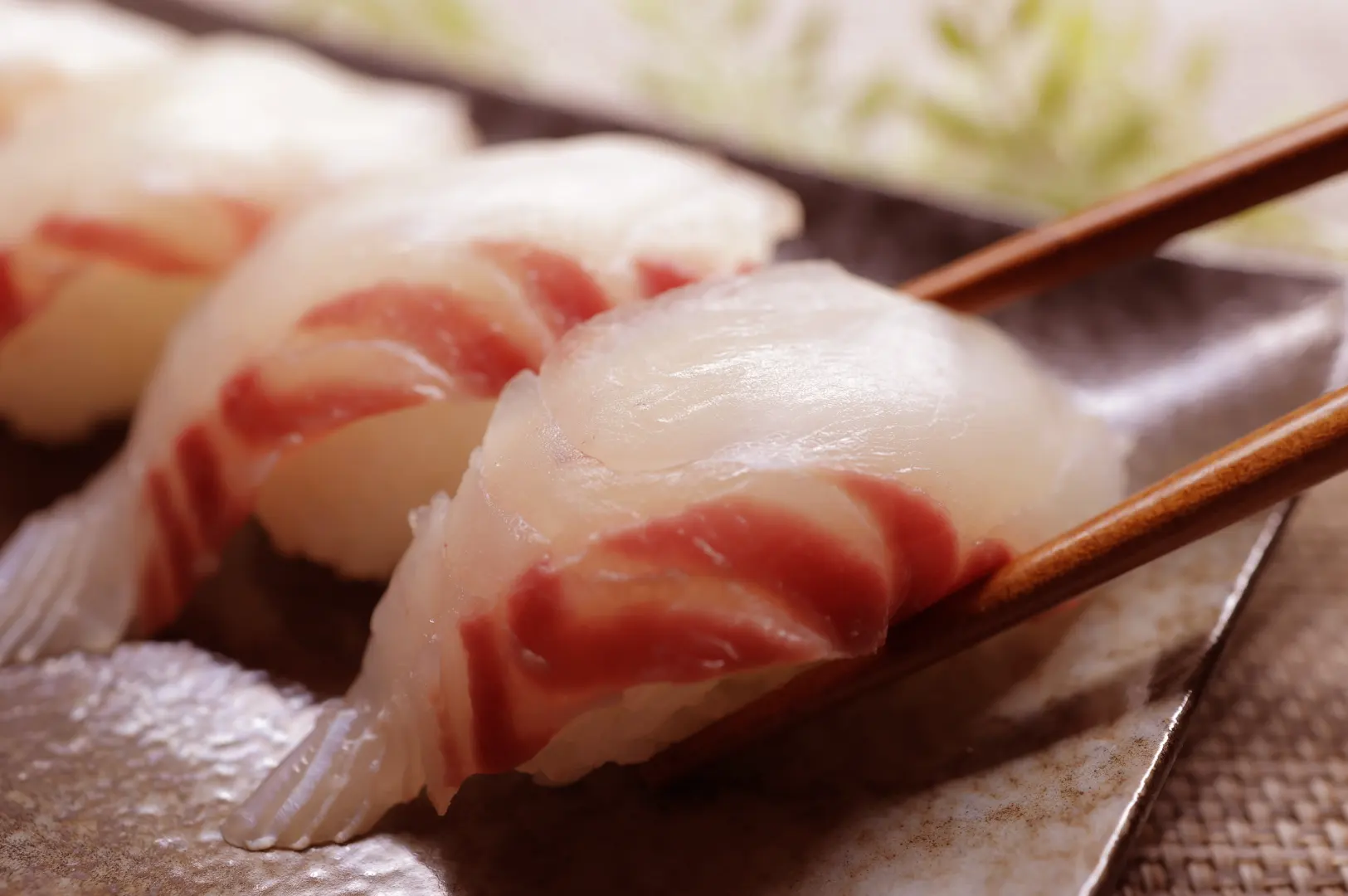
The Soft Salt of Sea Bream
The sea bream arrived like a pale moon on warm rice, its surface brushed with a quiet sheen, its edges almost translucent under the counter light. A few grains of salt rested on top, so fine they seemed less placed than breathed there. When I lifted it, the scent was gentle: clean sea air, steamed rice, and the faint citrus brightness of something just cut.
Outside, Singapore moved in its usual rhythm. Rainwater from an earlier shower still shone on the pavement. Office workers crossed the street in small waves, umbrellas tucked under arms, phones glowing in their hands. Somewhere nearby, a coffee machine hissed. Somewhere else, a bus sighed open its doors.
Inside the sushi bar, time narrowed to the space between my fingers and the fish.
Sea bream does not announce itself. It does not arrive with the richness of fatty tuna or the sweetness of scallop. It asks for patience. It invites the tongue to listen closely. Its beauty lies in restraint, in the almost-hidden sweetness that appears only after the first clean touch of salt.
The chef had seasoned it with care. Not enough to command attention. Just enough to awaken what was already there. This, to me, is one of sushi’s quiet lessons: the hand must know when to stop. Too much force, and the fish disappears beneath intention. Too little, and its voice remains asleep.
I placed the sushi on my tongue—a small act of attention.
At first, there was only softness. Then the rice loosened, warm and faintly sharp with vinegar. The sea bream followed slowly, cool and delicate, carrying a mild sweetness like water moving over stone. The salt bloomed at the end, not as a strike, but as a soft tide. It made the fish clearer. It made the moment clearer too.
In Singapore, where food often speaks in bold colors and full voices, such quietness can feel almost surprising. We are a city of fragrant laksa steam, charred satay smoke, peppery crab, and late-night supper tables bright with conversation. Our appetite is generous. Our food culture welcomes abundance.
Yet within this abundance, sushi has found a tender place.
Perhaps it is because we understand ritual. We know the comfort of returning to a familiar stall, the trust placed in a cook’s hands, the unspoken language between hunger and memory. A sushi counter offers a different shape of the same devotion. It is smaller, quieter, but no less deep.
The sea bream reminded me that elegance does not need distance. It can live in a lunch hour between meetings. It can rest on a small plate in a mall basement, beside a cup of tea, while the city continues its bright, urgent turning. It can appear in one mild piece of fish, seasoned with salt and silence.
When I finished, I did not feel full in the usual way. I felt steadied. As if the meal had rinsed something noisy from the day and left behind a clean line of thought.
There are flavors that stay because they are loud. There are others that stay because they leave space inside us. Sea bream belongs to the second kind.
The next time you sit at a sushi counter in Singapore, pause for the gentle pieces. Let the mild fish speak. Let the salt arrive softly. You may find that quiet elegance has been waiting for you all along.
Hiroshi Tanaka