
White Radish, Clean as Rain
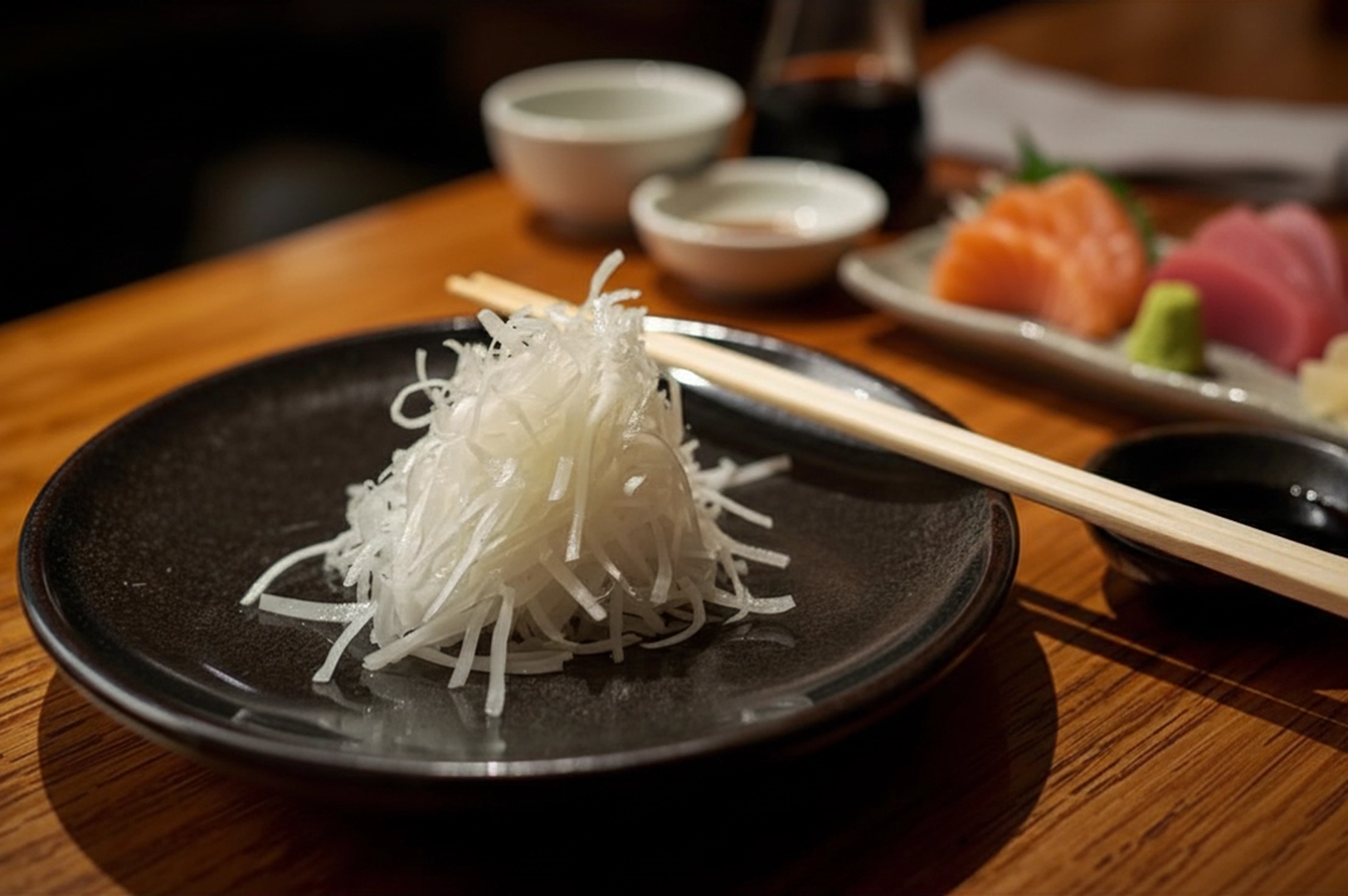
The wooden counter felt smooth under my fingertips, polished by years of quiet meals and careful service. The air carried the sharp, familiar tang of vinegar and the deep, savory weight of roasted seaweed. I watched the chef work with precise, practiced movements. He placed a small, unassuming mound of shredded daikon on the dark ceramic plate before me.
We often look past the white radish. In a city like Singapore, where food bursts with intense heat, rich spices, and heavy broths, our palates grow accustomed to noise. We naturally seek out the fatty, marbled belly of tuna or the sweet, ocean-brine pop of salmon roe. We chase the highlights of the meal. Yet, true appreciation of sushi rests in the quiet spaces between those bold moments. It lives in the crisp restraint of the daikon.
I took a small pinch of the translucent white threads with my chopsticks. It offered a clean, sharp snap against my teeth. A sudden rush of cold moisture followed, finishing with a faint, peppery sting. The heavy oil from my previous bite of torched yellowtail vanished instantly.
The daikon acts as a palate cleanser, but it serves a deeper purpose than simply washing away lingering flavors. It resets your senses. It forces you to pause, preparing you to experience the next delicate slice of fish as if it were your very first bite of the evening.
Before the next bite, read our companion piece: Sashimi, Wasabi, Ginger, and Soy Sauce.
Living in a fast-paced environment means we rarely stop to clear our thoughts. We carry the heat of the tropical sun, the rush of crowded train rides, and the pressure of tight deadlines straight into our dinners. Dining out often becomes just another rushed event on a busy schedule. But sitting at a traditional sushi bar offers a rare chance to step away from that heavy momentum.
When you eat daikon, you practice the art of letting go. You wash away the lingering traces of what came before so you can fully appreciate what sits right in front of you. The chef spends hours peeling and slicing the radish into perfect, even strands, knowing most diners will leave it untouched. Still, he prepares it with the same respect he gives the most expensive cuts of seafood.
A memorable meal creates a steady rhythm of tension and release. The rich, fatty fish provides the tension. The humble white radish brings the release. It acts as the steady, cleansing rain that washes the warm city pavement clean, leaving behind only a fresh, bright sense of possibility.
Next time you sit down for a meal, do not ignore the crisp white mound resting on the edge of your plate. Taste it on its own. Let its sharp, cool water clear your palate and steady your mind for the journey ahead.
What small, quiet details do you appreciate most when you slow down to dine? Take a moment to share your hidden culinary moments with us.
Hiroshi Tanaka