The Soft Wait Between Two Plates
By Sue Lin for Singapore Sushi Stories
I’d ordered, and now there was nothing to do but wait.
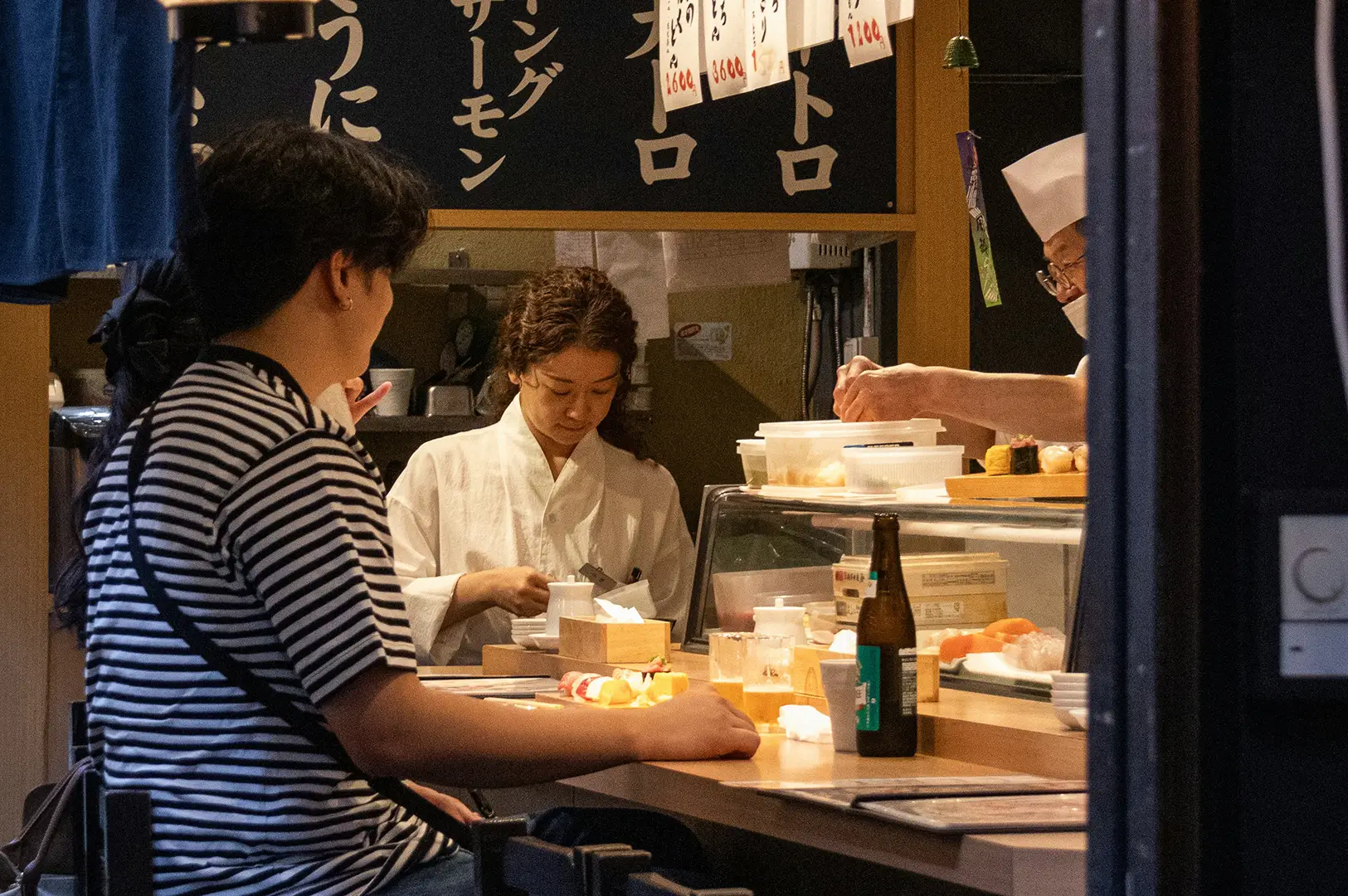
The counter was cool under my forearms, the wood worn smooth by years of elbows like mine. Outside, the mall roared on—escalators humming, a child crying somewhere near the toy shop, the lunchtime crowd pushing past in that half-jog we all know. I’d stepped in mostly to escape the heat. The glass door had closed behind me, and the noise dropped by half.
The chef worked without hurry. A cut here, a small press there. My first plate had gone. The second hadn’t come yet.
And in between, there was this soft, empty space.
We don’t leave much room for these spaces here. Lunch is a thing to finish. We eat with one eye on the clock, the other on the queue behind us, already thinking of the walk back to the office. Stillness feels almost like a fault, like we’ve forgotten to be efficient.
But sushi asks for the wait. You cannot rush the hand shaping the rice. You cannot hurry the fish into being sliced. So you sit, and the pause arrives whether you wanted it or not.
That patience is part of the craft, from shaping the rice to slicing the fish, as explored in The Art and Science Behind Japanese Sushi: Understanding Traditional Techniques.
My friend was across from me. For a moment, neither of us spoke.
Then she did. Something small—her mother’s knee, the doctor’s visit, the weekend she couldn’t stop thinking about. Nothing that needed saying over anything else. Just the kind of thing that surfaces when your hands are empty and your phone is, for once, face down.
I’ve noticed this before. The best conversations don’t happen while you eat. They happen in the gaps. In the wait between one plate and the next, when there’s nothing to hold and nowhere to look but at the person in front of you.
The chef set down the second plate. Salmon this time, cool and pale, the rice still faintly warm beneath it. We both paused to look. Then she kept talking, and I kept listening, and the food sat there a moment longer than it needed to.
That’s the quiet gift of this kind of meal. It slows you down without asking permission. The city outside keeps its pace—the escalators, the crowds, the heat pressing against the glass. But in here, the wait does its patient work. It hands you back a little time you didn’t know you’d lost.
We stayed longer than we meant to. Two plates became four. The gaps between them filled with the ordinary talk you only get to when you’re not rushing—the talk that turns a meal into an afternoon, and an afternoon into something you remember.
I finished my last piece slowly. Outside, the crowd had thinned. We’d let the wait carry us somewhere the hurry never would have.
Next time you sit at a counter, don’t fill the pause with your phone. Let it stay empty for a breath. You might find the person across from you was waiting to say something all along.
- Sue Lin